.png&w=3840&q=75)
Key takeaways
- 50+ real Azure interview questions with expert-level model answers across architecture, security, AKS, IaC, and DevOps.
- Six core areas employers test in 2026: networking, Entra ID, IaC, containers, FinOps, and observability.
- Average Azure Cloud Engineer salary: $145K–$167K in the US; senior roles reach $189K–$293K at top percentiles.
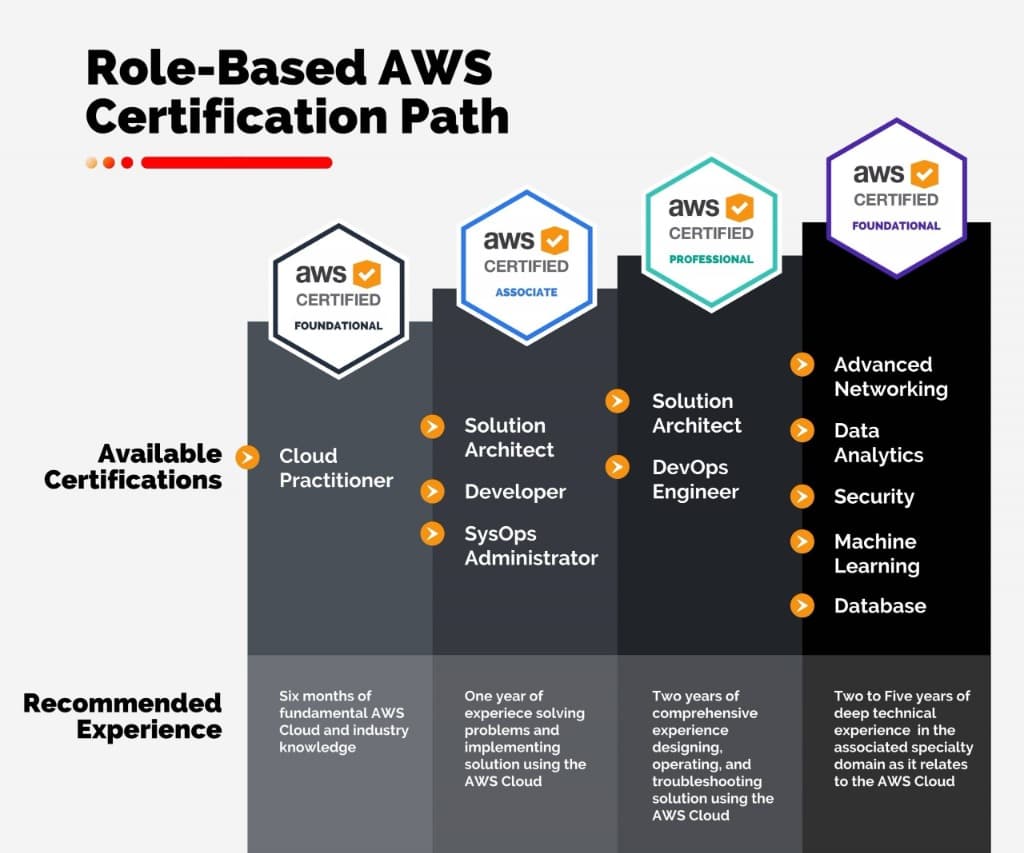
- Certification path: AZ-900 → AZ-104 → AZ-305 / AZ-400 / AZ-500 depending on your target role.
The Azure Cloud Engineer job market in 2026 is competitive, fast-moving, and extremely well-compensated. Hiring managers are probing multi-region architecture, IAM decisions, and live IaC pipelines — not basic definitions.
Whether you are preparing for your first cloud role or a senior architect position, this guide covers every topic interviewers test in 2026 with real questions and model answers.
Market
Why Azure Cloud Engineers Are in Record Demand in 2026
Azure powers roughly 25% of the global cloud market and 85% of Fortune 500 companies rely on it for mission-critical systems. The cloud market is projected to reach $1.6 trillion by 2030.
$145K
Avg base salary (Salary.com, Apr 2026)
$167K
Avg salary (Glassdoor, Apr 2026)
$189K
Senior Azure Engineer avg (Glassdoor)
$293K
Top earners 90th percentile (Senior)
Azure certifications correlate with 10–25% salary premiums. Roles requiring AZ-305 or AZ-400 consistently command the highest compensation bands.
Market signal
Azure has 350,000+ customers with 14% YoY growth. Senior platform engineering roles in major markets run $185K–$260K, closing in 4–6 weeks once the specialisation lane is confirmed.
Overview
What Azure Interviews Actually Test in 2026
Six areas that make or break Azure Cloud Engineer interviews in 2026:
- 01Azure Networking & Architecture: VNet design, NSGs, Private Endpoints, load balancers, hub-spoke topology, multi-region HA/DR patterns.
- 02Identity & Access Management: Microsoft Entra ID, RBAC, PIM, Conditional Access, Managed Identities — now a mandatory filter, not a specialisation.
- 03Infrastructure as Code: ARM templates, Bicep, Terraform — including state management, modular design, and CI/CD integration.
- 04Container Orchestration (AKS): AKS architecture, node pools, Helm, GitOps with Flux/Argo, cluster autoscaling, AKS vs Azure Container Apps trade-offs.
- 05Cost Optimisation & FinOps: Reserved Instances, tagging strategy, Azure Cost Management, right-sizing, auto-shutdown.
- 06Monitoring, Observability & DevOps: Azure Monitor, Log Analytics, Application Insights, Azure DevOps pipelines, CI/CD with security baked in.
Architecture · Networking · High Availability
Section 1 — Azure Architecture & Networking Interview Questions
Walk me through designing a three-tier web application in Azure with high availability across two regions.
AdvancedExpert answer
Place an Azure Front Door or Traffic Manager at the entry point for global load balancing and failover between regions. In each region, deploy a public-facing Azure Application Gateway (WAF enabled) in a dedicated public subnet. The application tier runs on Virtual Machine Scale Sets or AKS in private subnets, behind an internal load balancer. The data tier uses Azure SQL Database with active geo-replication — a writable primary in Region A and a readable secondary in Region B that can be failed over. Connect the tiers via separate subnets with NSGs scoped to minimum required traffic. Use Azure Availability Zones within each region for intra-region HA. Azure Site Recovery handles DR for stateful workloads. Configure health probes at every tier so Traffic Manager can detect failure and reroute within minutes.
Tip: They want trade-off awareness — cost of active-active vs. active-passive, and the RTO/RPO implications of each choice.
What is the difference between an NSG and Azure Firewall, and when do you use each?
IntermediateExpert answer
An NSG is a stateful packet filter on Layer 4 using a 5-tuple. It attaches to subnets or NICs. Azure Firewall is a fully managed Layer 4–7 service with FQDN filtering, threat intelligence, DNAT rules, and centralised policy management. Use NSGs for subnet/NIC-level control between tiers. Use Azure Firewall as the central egress control point — especially when filtering internet-bound traffic by FQDN. In enterprise designs, you use both: NSGs for micro-segmentation, Azure Firewall for perimeter control.
What is a Private Endpoint in Azure, and when would you use it over a Service Endpoint?
IntermediateExpert answer
A Private Endpoint creates a NIC with a private IP from your VNet that maps to an Azure PaaS service. Traffic flows over the Microsoft backbone — never the public internet. A Service Endpoint routes traffic from a subnet to PaaS over the backbone but does not eliminate the public endpoint. For production with strict compliance (PCI DSS, HIPAA), use Private Endpoints. Service Endpoints are acceptable for dev/test or when budget does not justify Private Endpoint overhead.
Tip: They're testing architectural and security implications, not just definitions.
Describe a hub-spoke network topology in Azure and its advantages.
IntermediateExpert answer
A central hub VNet contains shared services: Azure Firewall, VPN/ExpressRoute gateway, Azure Bastion, and DNS. Spoke VNets peer to the hub; traffic between spokes flows through the hub firewall for centralised inspection. Advantages: centralised security policy, simplified governance, lower cost (shared services not replicated), and consistent egress filtering. For large enterprises, Azure Virtual WAN can automate hub-spoke at scale.
Entra ID · RBAC · PIM · Zero Trust
Section 2 — Identity, Security & Compliance Questions
Explain how you would implement least-privilege access for an application on Azure VMs that reads from Blob Storage and writes to Azure SQL.
AdvancedExpert answer
Assign a System-Assigned Managed Identity to the VM. Grant "Storage Blob Data Reader" scoped to the specific container. For SQL, create a contained database user for the Managed Identity with only necessary table permissions. Remove connection-string credentials from code. Enforce via Azure Policy. Audit access via Log Analytics.
Tip: IAM misconfiguration is the #1 cause of costly cloud incidents in 2026 interviews.
What is Privileged Identity Management (PIM) in Microsoft Entra ID and how does it improve security?
IntermediateExpert answer
PIM provides just-in-time privileged access. Users are eligible for high-privilege roles — they activate when needed with MFA, approval, and time bounds (e.g. 4 hours). This eliminates standing access and satisfies NIST, SOC 2, and ISO 27001 PAM requirements.
What is the difference between an App Registration and an Enterprise Application (Service Principal) in Entra ID?
AdvancedExpert answer
An App Registration is the global definition — identity, credentials, API permissions. An Enterprise Application (Service Principal) is the local instance in a tenant where you assign RBAC, Conditional Access, and user access. The distinction matters for multi-tenant apps and correct RBAC scoping.
How do you implement a zero-trust security model on Azure?
AdvancedExpert answer
Zero Trust: never trust, always verify. Implement across identity (MFA, Conditional Access, PIM), devices (Intune compliance), applications (Defender for Cloud Apps), data (Purview labels), infrastructure (Azure Policy, JIT VM access), and network (NSGs, Private Endpoints, Azure Firewall with threat intelligence).
ARM Templates · Bicep · Terraform · GitOps
Section 3 — Infrastructure as Code: ARM, Bicep & Terraform
What are the key differences between ARM templates, Bicep, and Terraform for Azure deployments?
IntermediateExpert answer
ARM is JSON-based and verbose but has full Azure parity. Bicep compiles to ARM — more readable with strong VS Code tooling; recommended for Azure-native IaC. Terraform uses HCL, supports multi-cloud, and has mature state management. Senior candidates in 2026 are expected to have hands-on Terraform experience.
resource storageAccount 'Microsoft.Storage/storageAccounts@2023-01-01' = {
  name: storageAccountName
  location: location
  sku: { name: 'Standard_LRS' }
  kind: 'StorageV2'
}How do you manage Terraform state in an Azure environment, and what are the risks of local state?
AdvancedExpert answer
Store state in Azure Blob Storage with locking via blob leases. Configure RBAC so only CI/CD principals write state. Enable soft delete and versioning. Use separate state per environment. Never run apply in parallel. Keep secrets in Key Vault, not in state files.
AKS · Containers · GitOps · Helm
Section 4 — Azure Kubernetes Service (AKS) Questions
When would you choose Azure Container Apps over AKS, and when does AKS win?
AdvancedExpert answer
Choose Azure Container Apps for serverless containers, KEDA scale-to-zero, and teams without Kubernetes expertise. Choose AKS when you need full Kubernetes control, custom CNIs, GitOps at cluster level, or specific node hardening for compliance.
Describe how you would secure an AKS cluster in production.
AdvancedExpert answer
Use Entra ID RBAC; disable local accounts; private cluster where possible. Harden nodes with auto-upgrade. Use Workload Identity instead of pod credentials. Implement Calico network policies. Scan images in ACR. Mount secrets from Key Vault via Secrets Store CSI Driver.
Azure DevOps · Pipelines · CI/CD · GitOps
Section 5 — Azure DevOps & CI/CD Pipeline Questions
Describe a production-grade CI/CD pipeline in Azure DevOps for a containerised application.
AdvancedExpert answer
Build: unit tests, SAST, Docker build, push to ACR with commit SHA tag. Test: deploy to dev namespace via Helm, integration tests. Staging: load tests, DAST, manual approval gate. Production: blue-green or canary with Application Insights rollback on error-rate threshold. Use Managed Identity service connections throughout.
Tip: Mention security scanning, approval gates, and automated rollback for senior-level signal.
What is GitOps and how does it differ from traditional CI/CD? How do you implement it with AKS?
AdvancedExpert answer
Traditional CI/CD pushes to the cluster. GitOps pulls: desired state lives in Git; Flux or Argo CD reconciles continuously. CI updates image tags via PR to the GitOps repo. Benefits: auditable deployments, git revert rollbacks, reproducible cluster state.
Azure Cost Management · Reserved Instances · FinOps
Section 6 — Cost Optimisation & FinOps Questions
Walk me through how you would reduce an Azure bill by 40% without reducing capability.
AdvancedExpert answer
Tag everything for attribution. Use Cost Management budgets and anomaly alerts. Right-size VMs from Monitor metrics. Auto-shutdown dev/test via DevTest Labs. Buy 1-year RIs for stable production. Use AKS Spot node pools for batch workloads. Move cold blobs to Cool/Archive tiers. Combined changes routinely deliver 30–50% savings.
Tip: Saying "we reduced monthly spend by $15,000" beats abstract percentages.
Azure Monitor · Log Analytics · Application Insights
Section 7 — Monitoring & Observability Questions
How would you design an observability stack for a microservices application on Azure?
AdvancedExpert answer
Metrics via Azure Monitor with action groups. Centralise logs in Log Analytics with diagnostic settings on every resource. Instrument services with Application Insights or OpenTelemetry for distributed tracing. Use availability tests and Azure Workbooks. On AKS, deploy Container Insights for pod-level telemetry.
Certifications
Azure Certification Path for Interview Readiness
Every major Azure interview topic maps directly to a Microsoft certification:
| Certification | Exam | Interview Topics Covered | Salary Range | Difficulty |
|---|---|---|---|---|
| Azure Fundamentals | AZ-900 | Core services, cloud models, pricing | Entry signal | Beginner |
| Azure Administrator Associate | AZ-104 | VNets, NSGs, storage, Entra ID, ARM | $100K–$145K | Intermediate |
| Azure Solutions Architect Expert | AZ-305 | HA/DR design, hybrid, governance | $145K–$220K | Advanced |
| Azure DevOps Engineer Expert | AZ-400 | CI/CD, IaC, GitOps, DevSecOps | $150K–$210K | Advanced |
| Azure Security Engineer Associate | AZ-500 | Entra ID, PIM, Key Vault, Defender | $140K–$200K | Advanced |
| Azure Network Engineer Associate | AZ-700 | VNets, ExpressRoute, VPN, Firewall | $130K–$185K | Intermediate |
insureTech Skills Azure training aligns to AZ-104, AZ-305, and AZ-400 with hands-on labs and mock interviews. Explore Azure training paths →
Roadmap
Your 30-Day Azure Interview Preparation Checklist
Build interview readiness systematically with confident, scenario-based answers.
Week 1 — Foundations & Architecture
- Study Azure's global infrastructure: regions, availability zones, availability sets
- Practice designing a 3-tier application architecture diagram by hand
- Master VNet peering, hub-spoke topology, and UDR (User Defined Routes)
- Understand NSGs vs Azure Firewall vs DDoS Protection tiers
- Study Private Endpoints vs Service Endpoints with real use-case examples
Week 2 — Security, Identity & IaC
- Deep-dive into Microsoft Entra ID: users, groups, service principals, managed identities
- Practice explaining RBAC, PIM, and Conditional Access policies
- Write at least 3 Bicep templates from scratch (storage account, VNet, VM)
- Set up Terraform with Azure backend — practice state management concepts
- Study Azure Key Vault: secrets, keys, certificates, access policies vs RBAC
Week 3 — Containers, DevOps & Cost
- Deploy a multi-node AKS cluster; practice node pool management and autoscaling
- Build an Azure DevOps pipeline for a containerised app end-to-end
- Study GitOps concepts and practice describing a Flux or Argo CD workflow
- Use Azure Cost Management to analyse a real subscription's spend patterns
- Understand Reserved Instances, Spot VMs, and Hybrid Benefit calculations
Week 4 — Mock Interviews & Scenario Drills
- Record yourself answering 5 architecture questions — review for clarity
- Practice the "design under constraints" question format (budget, RTO, compliance)
- Prepare 3 STAR-format stories: a migration project, a cost reduction, a security incident
- Research your target company's Azure usage and tailor your examples
- Review salary data and prepare your negotiation anchor
Compensation
Azure Cloud Engineer Salary Negotiation Guide 2026
Entry to mid-level (2–5 years): $130,000–$165,000 in major tech markets. Senior (5–8 years, AZ-305 or AZ-400): $152,000–$239,000. Top earners exceed $293,000 at the 90th percentile.
Anchor 10–15% above your target in negotiations. Cite certifications, cost reduction metrics, and team scope — e.g. managing a 200-VM environment and cutting monthly spend by $18,000.
Salary insight
The gap between the 25th and 75th percentile is $70,000+. That spread is driven by certifications, demonstrated cost impact, and negotiation confidence — not years alone.
FAQ
Frequently Asked Questions
What topics are covered in an Azure Cloud Engineer interview in 2026?
Azure Cloud Engineer interviews in 2026 cover six core areas: Azure architecture and networking (VNets, NSGs, Private Endpoints, hub-spoke), Identity and Access Management (Entra ID, RBAC, PIM, Conditional Access), Infrastructure as Code (Bicep, ARM, Terraform with state management), container orchestration with AKS, CI/CD pipelines with Azure DevOps, and cost optimisation strategies. Security awareness has become a mandatory filter across all engineering levels.
What is the average Azure Cloud Engineer salary in 2026?
The average Azure Cloud Engineer salary is $145,211 (Salary.com, April 2026) to $166,912 (Glassdoor, April 2026) in the US. Senior engineers earn $152,000–$239,000. Top earners at the 90th percentile exceed $293,000. Certified professionals holding AZ-305 or AZ-400 consistently earn at the top of their experience band.
Which Azure certifications should I get before an Azure Cloud Engineer interview?
The recommended path: AZ-900 (Azure Fundamentals) → AZ-104 (Azure Administrator Associate) → AZ-305 (Solutions Architect Expert) for architecture roles → AZ-400 (DevOps Engineer Expert) for DevOps roles → AZ-500 (Security Engineer Associate) for security specialisations. insureTech Skills Azure training programs align to AZ-104 and AZ-305 objectives with live labs and placement support.
How long does it take to prepare for an Azure Cloud Engineer interview?
With existing IT experience: 4–8 weeks of structured preparation. Without prior cloud experience: plan 3–6 months for foundational Azure knowledge before specialised interview prep. Our 30-day checklist in this guide provides a week-by-week structure.
What is the difference between Azure NSG and Azure Firewall?
An NSG is a Layer 4 stateful packet filter on a 5-tuple, attached to subnets or NICs. Azure Firewall is a fully managed Layer 4–7 service with FQDN rules, threat intelligence, DNAT, and centralised Firewall Policy. Use NSGs for micro-segmentation; use Azure Firewall as the central egress/ingress governance layer in hub-spoke architectures.
Is the Azure interview harder for senior vs junior roles?
Yes. Junior interviews focus on core service knowledge and following patterns. Senior interviews involve live architecture design under constraints, trade-off analysis, cost justification, and security governance. Expect whiteboard sessions with specific RTO/RPO/cost requirements and be prepared to defend every architectural choice.